Best Flooring for a Beach House: What Actually Survives Sand, Salt, and Summer Rentals
Beach houses destroy floors. Sand tracks in from every shoe, salt corrodes finishes, wet swimsuits puddle on every surface, and if you rent it out, renters treat your floors worse than you ever would. Most flooring that looks fine in a regular home falls apart in a shore property within five years.
We install at the Jersey shore (Avalon, Stone Harbor, Sea Isle, Ocean City, Margate, Long Beach Island, Cape May) and have seen what works and what doesn't in real beach house conditions. Here's the actual answer.
The shore conditions that kill regular floors
Three forces destroy beach house flooring:
Sand. It's everywhere. Tracked in, blown in, brought in by wet bodies. It acts like sandpaper underfoot, grinding finishes off floors faster than any other environment.
Moisture. Humid summers, salt-air corrosion, wet swimsuits, rain through open doors, dripping bodies coming up from the beach. Shore homes have humidity that swings 30 to 40 percent across seasons.
Renter behavior (if applicable). Dropped items, dragged furniture, no respect for "no shoes" signs, spilled drinks. If you rent the property, multiply this by every booking.
The winner: luxury vinyl plank (LVP)
For 90 percent of beach houses, the right floor is luxury vinyl plank. Here's why:
- 100 percent waterproof, including the seams
- Dent-resistant against dropped beach chairs and coolers
- Scratch-resistant against sand grinding underfoot
- Doesn't warp with humidity swings
- Easy to clean (broom, mop, done)
- Looks like real wood in modern installations
- Cost: $4 to $8 per square foot installed
LVP is the default recommendation for shore homes because it solves every problem regular flooring has. Sand can't damage it. Water can't penetrate it. Humidity can't warp it. See our vinyl plank service.
The premium LVP we recommend for beach houses is 6mm or thicker with a 22-mil wear layer minimum. Cheaper LVP works in normal homes but fails faster in beach conditions.
The second-best option: porcelain or stone tile
For high-end shore homes (or just bathrooms and entryways in any shore home), large-format porcelain tile is excellent:
- Indestructible against sand, water, and salt
- Great with radiant heating in winter rentals
- Premium aesthetic
- Cost: $7 to $12 per square foot installed
The downside is harder underfoot and colder in winter without radiant heat. For full-house use in a primary beach residence where you walk barefoot a lot, tile gets uncomfortable in colder months.
What to avoid in a beach house
Solid hardwood. This is the most common mistake. Solid wood floors in shore homes look stunning for two years, then start cupping, gapping, and warping as humidity cycles. We've replaced more cupped hardwood at the shore than we want to count.
Laminate. Standing water destroys laminate. One wet swimsuit forgotten on the floor for a day can swell the edges permanently. Don't put laminate in a beach house.
Carpet. Sand gets into carpet and never fully comes out. Even with deep cleaning. Carpet in shore homes smells like mildew within a few summers.
Bamboo (most varieties). Marketed as durable but actually one of the worst floors for shore conditions because of how it absorbs moisture.
The compromise option: engineered hardwood
If you absolutely want the look of real hardwood in your beach house, engineered hardwood is the only acceptable form. The plywood base layer doesn't expand and contract with humidity the way solid wood does. See our hardwood vs engineered guide for the full breakdown.
Best practices for shore-house engineered hardwood:
- 5mm or thicker wear layer (so it can be refinished if damaged)
- Aluminum oxide finish (commercial-grade durability)
- Wider planks (6 inches or more, show fewer seams when sand gets in cracks)
- Mid-tone stains (lighter floors show sand worse, darker floors show salt residue)
Even with all of this, engineered hardwood in a shore house will need a refinish every 10 to 15 years versus once-in-a-generation for an inland home. Accept that, and engineered hardwood is a beautiful choice.
Where to install what
- Whole-house LVP. Most rental properties and primary shore homes.
- LVP in main living, tile in bath and kitchen. Slightly more premium feel.
- Engineered hardwood in living, LVP in bath and kitchen, tile in mudroom. High-end shore residences.
- Tile throughout main level, engineered upstairs. Top-tier custom shore builds.
Style considerations
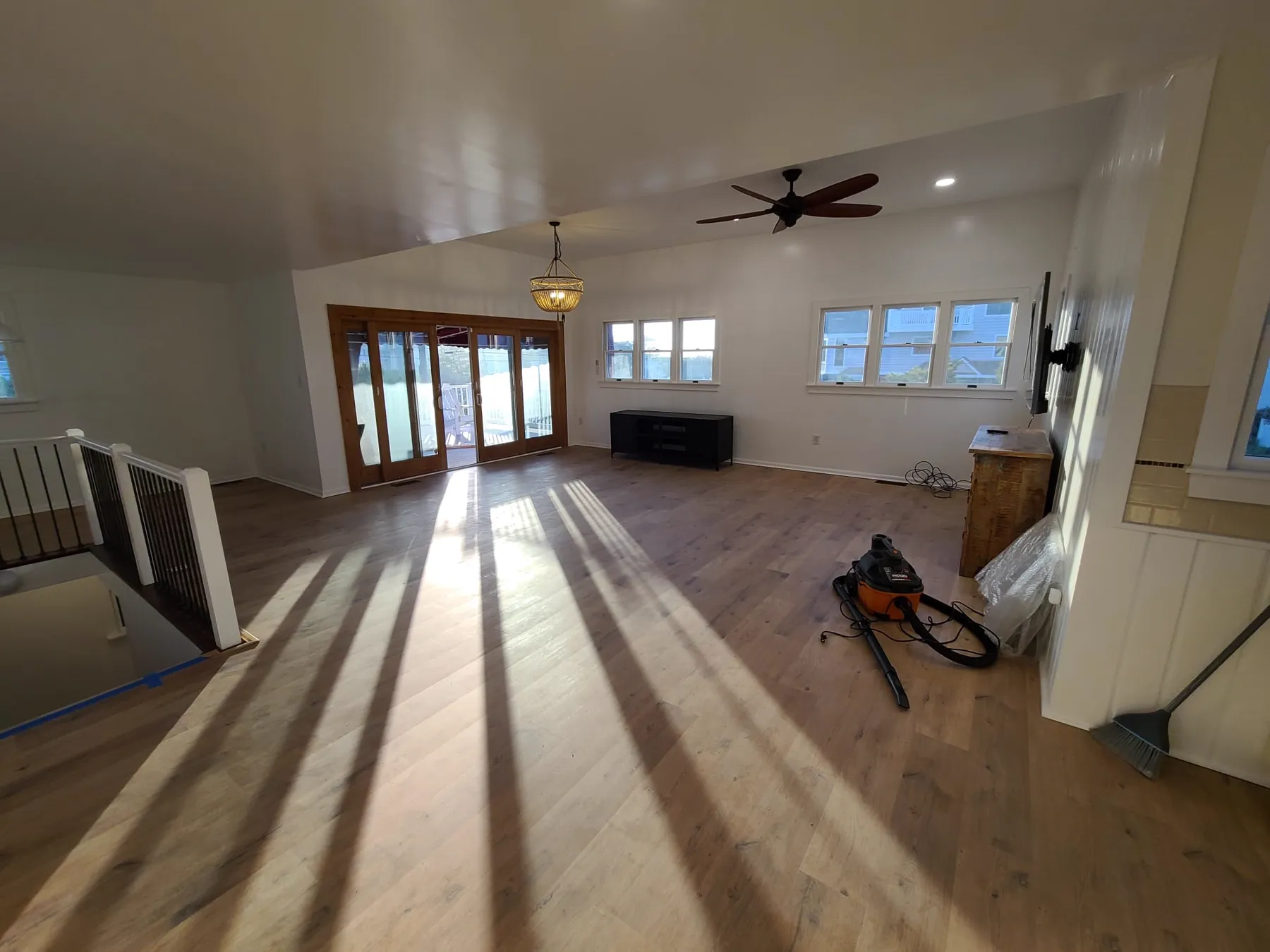
Most shore homes look best with light-to-mid tone floors. Driftwood-colored LVP, light oak engineered, sun-bleached tiles. These reflect natural light, hide sand, and pair with coastal furniture and decor.
Dark floors look dramatic in showrooms but fight against the coastal light and show every sand grain.
How quickly we can install for shore properties
Most LVP installations at the shore take 2 to 3 days for an average house. We work specifically around your rental schedule when applicable, often slotting work between renter departures and the next arrival.
Free in-home estimates across Avalon, Cape May, and the entire NJ shore.
Third-generation flooring craftsman serving PA, NJ, and DE since taking over the family business in 2012. Owner on every estimate and every install.
More about DeSouza Floors →