Luxury Vinyl Plank vs Laminate: The Differences That Actually Matter
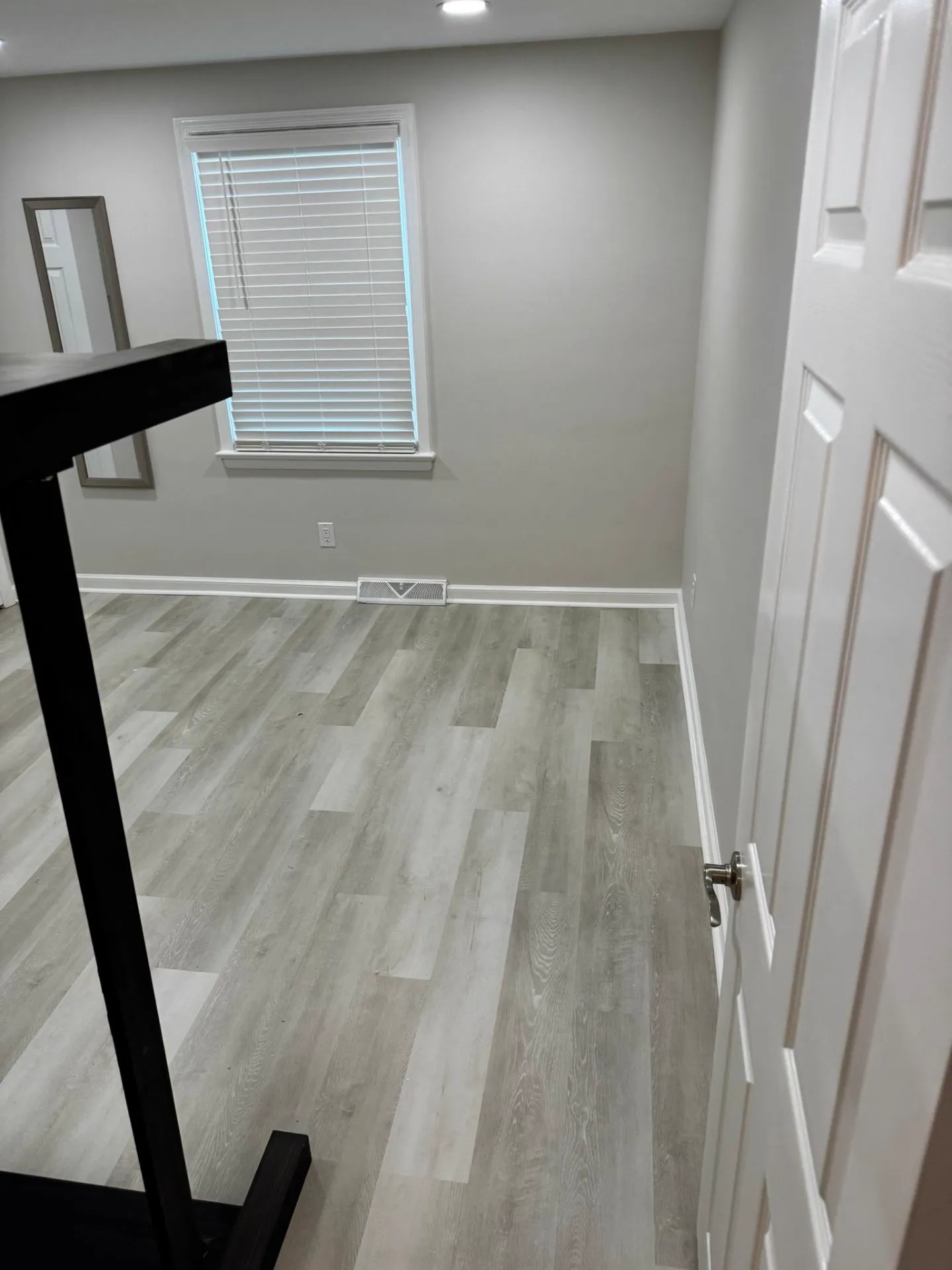
These two floors look similar on a showroom floor. They cost similar amounts. Most homeowners can't tell them apart by sight. They're not the same product, and choosing the wrong one for the wrong room is one of the most common (and expensive) flooring mistakes we see.
Here's the difference, where each one shines, where each one fails, and how to know which is right for your home.
What luxury vinyl plank (LVP) actually is
LVP is solid vinyl all the way through. The plank itself is waterproof. The top wear layer has a printed wood pattern protected by a clear urethane coating. Most quality LVP is 5mm to 8mm thick with a click-lock installation system.
The selling point: it's truly waterproof. You can flood it and it doesn't care. The plank doesn't absorb water, swell, or warp. See our vinyl plank service.
What laminate actually is
Laminate has four layers: a backing layer, a high-density fiberboard (HDF) core, a photographic image of wood grain, and a clear melamine wear layer on top. The core is wood fiber, which means it absorbs water if it gets past the wear layer or down through the seams. See our laminate service.
The selling point: cheaper than LVP, often more realistic wood grain at the high end (because it can be printed with more detail), and harder underfoot (the HDF core feels more solid than vinyl).
Side-by-side comparison
Waterproofing. LVP: 100 percent waterproof, plank and seams. Laminate: water-resistant on the surface, but seams and edges absorb water and swell.
Durability. LVP: highly scratch-resistant, dent-resistant, holds up to dogs and rolling chairs. Laminate: scratch-resistant on the surface, more dent-prone, edges can chip.
Realism. Premium LVP looks excellent. Budget LVP can look plasticky. Premium laminate often looks more realistic than LVP because of higher-resolution printing. Budget laminate looks fake.
Feel underfoot. LVP: slightly softer, warmer to bare feet, quieter. Laminate: harder, colder, more sound (footsteps echo).
Lifespan. LVP: 20 to 30 years in residential use. Laminate: 15 to 25 years.
Cost installed. LVP: $4 to $8 per square foot. Laminate: $3 to $6 per square foot.
Where LVP wins
- Kitchens. Spilled water, dropped pots, dishwasher leaks. LVP doesn't care. Laminate seams will swell over time.
- Bathrooms. Same logic. Standing water from a shower mishap or overflowing toilet can destroy a laminate floor in hours.
- Basements. Concrete subfloors and basement moisture make laminate a bad idea. LVP is the standard recommendation for finished basements.
- Beach homes and shore properties. Sand, salt, wet swimsuits, renters who track in everything. See our beach home floors guide.
- Homes with pets. Dogs that come in from the rain, water bowls that get knocked over, the occasional accident. LVP shrugs it off.
Where laminate wins
- Budget-conscious dry installations. If you have a dry living room, family room, or bedroom and want to save 20 to 30 percent on the floor, laminate is genuinely good.
- Rental properties. Premium laminate (12mm thickness with AC4 or higher wear rating) is the right call for rentals where you want durability without LVP pricing.
- Flip houses. ROI math works better on laminate for short-hold flips.
- High-traffic dry areas. Hallways and entry corridors that don't get wet but get a lot of foot traffic.
The mistake we see all the time
Homeowners install laminate in a kitchen because their flooring sales rep told them "modern laminate is waterproof." It isn't. Within two years, the seams around the dishwasher and refrigerator swell, the edges peel up, and they're calling us to replace the whole floor.
If there's any chance of standing water in the room (kitchen, bath, basement, mudroom, beach house), it's LVP. Not laminate. No exceptions.
How to choose
Three questions:
- Will this room ever get wet? Yes equals LVP. No equals either works.
- What's the budget? Tight equals laminate (if dry room). Flexible equals LVP either way.
- Is this a long-term home or short-term hold? Long-term equals LVP for durability. Short-term equals laminate for ROI.
For a room-by-room walkthrough, see how to choose flooring.
The honest tradeoff
LVP downside. It's plastic. Some homeowners don't love that, even when they can't visually tell. It also doesn't add the resale value that real hardwood does.
Laminate downside. Water is a real risk in any home. Even if you don't have a "wet" room, kitchens get dishwasher leaks, basements get pipe failures, and bathrooms have toilet overflows. Laminate's vulnerability is a real strike against it.
Get a recommendation for your actual home
Caio comes out, looks at the rooms you're flooring, asks about how you live (pets, kids, beach house, rental), and tells you which makes sense room by room. Sometimes the right answer is LVP in some rooms and laminate in others.
Free in-home estimates across PA, NJ, and DE.
Third-generation flooring craftsman serving PA, NJ, and DE since taking over the family business in 2012. Owner on every estimate and every install.
More about DeSouza Floors →